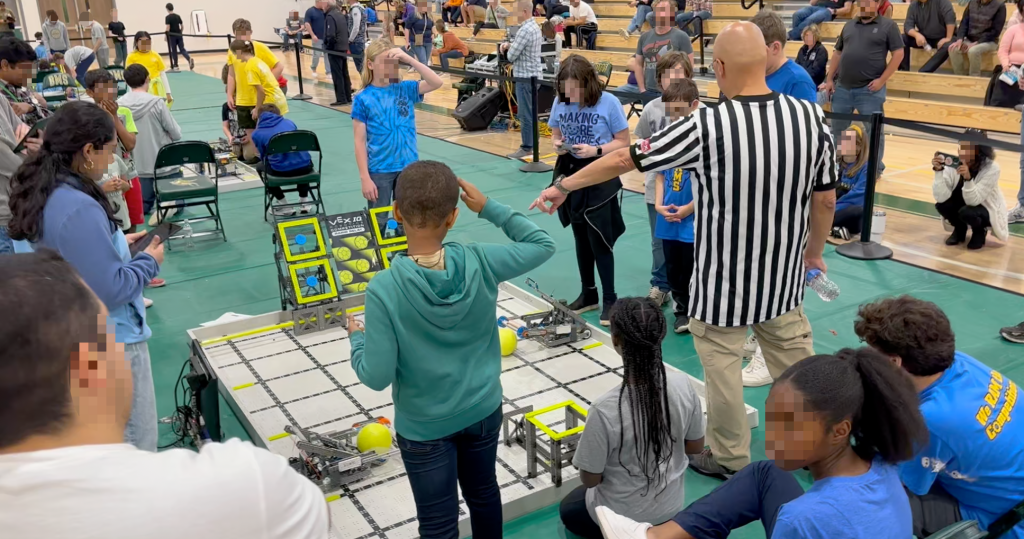
My kiddos participate in a robotics program called VEX IQ, which includes a competition. This season’s game is called Rapid Relay, and it’s quite a bit more complex than games from previous years. This past weekend was our first competition of the season, and that complexity was on full display.
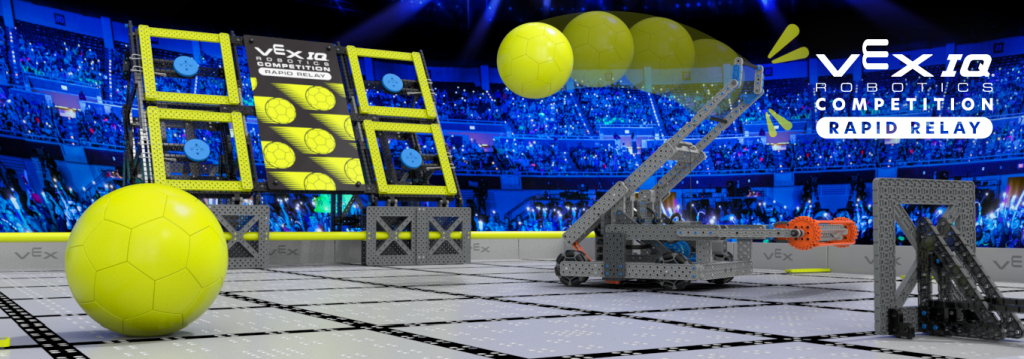
This is a program run by volunteers, teachers, and parents, and these are middle school kids. The rules for this year’s game are defined in a 73-page PDF with a lot of cross-referencing. It’s very difficult to make sense of it all in the first place, and even harder to get information out of it in the heat of the event. The head referee for this competition actually made two majorly incorrect statements at the beginning of the day; they were corrected, but it set a tone, and things like that kept happening throughout the day.
At one point the light bulb went off in my head: This is exactly what large-language model generative AIs are really good at helping with. This has been one of the pillars of my “AI for L&D” philosophy: AI as the learning experience, use it to synthesize easy-to-understand and actionable answers from complex sources of truth at the moment of need.
So, I did. I used the Custom GPT tool that OpenAI offers. Essentially, I fed it the 73-page official rule document and wrote instructional prompts to answer questions about that document in a simple way. I had to do quite a bit of shaping in the instructions I gave it, rewriting the prompts several times. I also did some adversarial testing to make sure it wouldn’t go off-topic or make things up, and I wanted to ensure that if students ever used it, it would not discuss anything outside of that scope. It ended up working out really well. I shared it with the head coach from our school, and she said she ended up using it all day to more easily find and understand information.
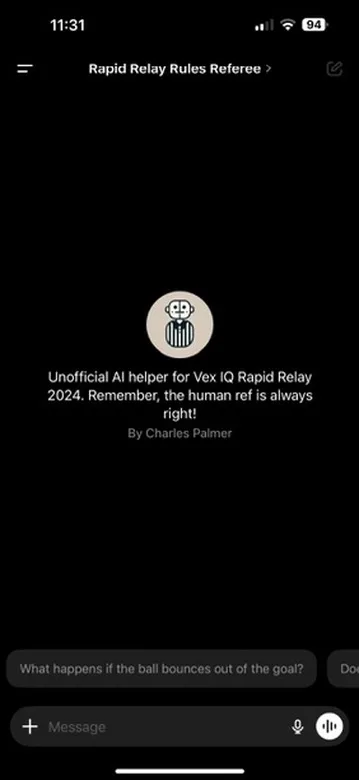
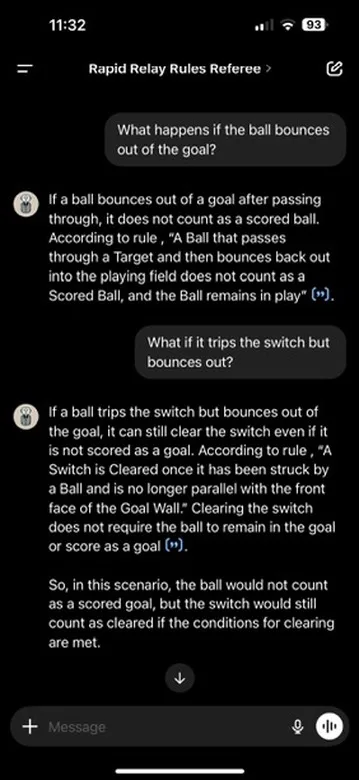
I don’t know that I would go so far as to call this a full project for the portfolio, but I’m pretty happy with it. I think it’s a great example of how these tools can be used in learning situations, whether that’s in K-12, corporate, or adult learning. If you want to play with it, just click here. It requires logging into ChatGPT, but you shouldn’t need any sort of special account.
I’ll also take this moment to be a proud dad and say that while neither of my kiddos’ teams got into the finals matches this weekend, they both did really great throughout the day; I saw a lot of awesome teamwork and learning, and they walked away with a ton of ideas on how they’re going to innovate with their robots for next time—which is what it’s all about!